Trump Signs Order To Bring Back Confederate Statues In Controversial Move To ‘Restore Truth To American History’

Trump recently signed an executive order aimed at “bringing back truth and sanity to American history.” Since he became president, he has signed more than 100 executive orders, with some causing more debate than others. One of his recent orders about American elections received a lot of backlash.
The new order, signed on March 27, is about “restoring Federal parks, monuments, memorials, statues, and markers” and making sure that The Smithsonian “honors American history” and “greatness.”
The new order aims to restore historical monuments
The order instructs Vice President JD Vance, who is part of the Smithsonian Board of Regents, to eliminate “improper, divisive, or anti-American ideas” from the Smithsonian.
The Smithsonian is not just a single museum; it includes a whole network of museums, research centers, and even the National Zoo.


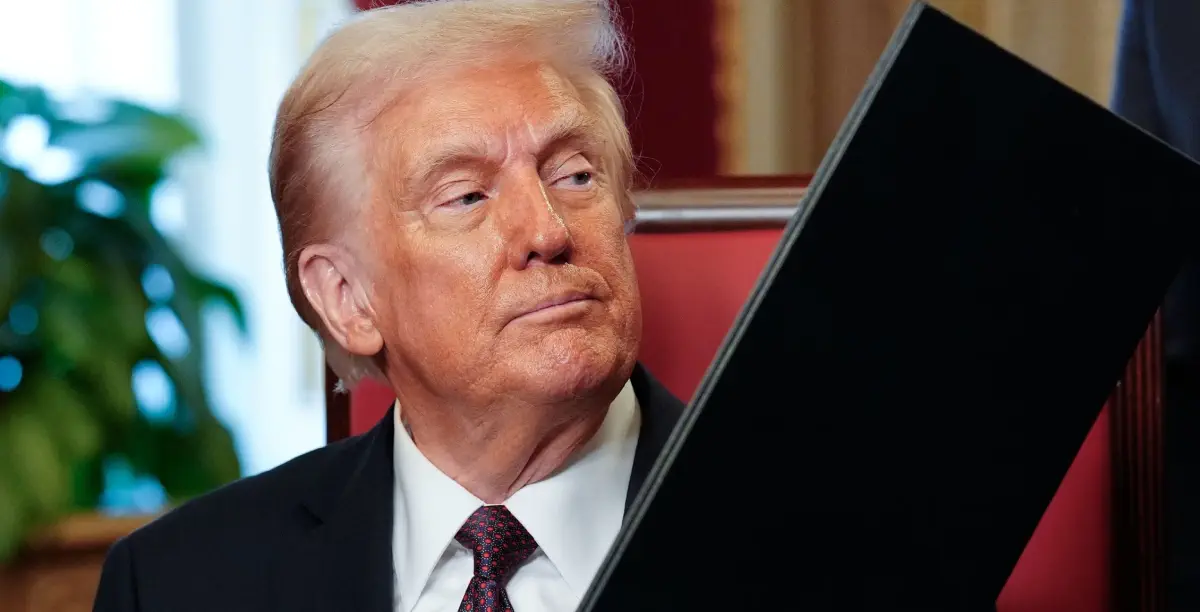
Federal parks, statues, and memorials will be restored
This isn’t just about museums. The order also directs the administration to work with Congress.
The goal is to ensure future Smithsonian funding doesn’t go to exhibits or programs that “degrade shared American values,” “divide Americans by race,” or promote ideas that clash with federal law.
It also says the American Women’s History Museum will honor women’s achievements but won’t recognize men as women.
The order affects more than museums
The order goes beyond just museums. It also tells the Secretary of the Interior to bring back any Federal parks, monuments, memorials, statues, or markers that were removed or altered in the past five years. The argument is that these changes misrepresented history or downplayed important people or events.
This means that statues of Confederate leaders like Robert E. Lee and Albert Pike, which were taken down across the country after the Black Lives Matter protests in 2020, might be put back up.
Many of these monuments were removed because of their connections to slavery, racism, and the Confederacy’s involvement in the Civil War.
The Smithsonian is being targeted for a reason
Why focus on the Smithsonian? The order claims that the previous administration promoted a “divisive ideology” that changed the way people view America’s freedom.
It argues that this ideology spread false stories about American history in places like the Smithsonian and national parks.
The Smithsonian is accused of promoting divisive ideology
Once seen as a symbol of American greatness, the Smithsonian is now facing criticism for allegedly promoting ideas that depict American and Western values as negative.
An executive order points out several instances of what it describes as “divisive ideology” in its exhibits. For example, one exhibit at the American Art Museum supposedly connects sculpture to “scientific racism,” while another at the American Women’s History Museum intends to honor male athletes competing in women’s sports.
The order also specifically mentions the National Museum of African American History and Culture (NMAAHC) for supposedly implying that concepts like “hard work,” “individualism,” and “the nuclear family” are part of “White culture.”
However, this accusation comes from an infographic the museum shared online in 2020, which was taken down quickly — not from an actual exhibit.
Trump wants to celebrate ‘American greatness’
Trump is advocating for this order to “celebrate American greatness” and foster “a sense of national pride.”
He believes it’s important to ensure that history is recognized “accurately, fairly, and with pride,” highlighting the “remarkable progress, liberty, and creativity” that characterize the nation.
Critics say the order whitewashes history
Critics of Trump believe that his order tries to change history by focusing on a cleaned-up, one-sided view of events.
Historians and civil rights supporters worry that bringing back Confederate statues is a step backward, ignoring the struggles and injustices associated with these figures.
Chandra Manning, a history professor at Georgetown University, told The Washington Post, “Claiming that sharing the complete story of the United States is a scheme to portray the country negatively shows a deep insecurity about our nation and its history.”
The order fits with Trump’s other executive actions
Since he became president, Trump has signed more than 100 executive orders. Some, like the one regarding American elections, have received criticism.
He has also tried to rename the Gulf of Mexico, eliminate the Department of Education, and made changes that could affect medical patients.
Trump’s critics are already responding, especially regarding his assertion of restoring free speech. The discussion about this executive order is just starting.