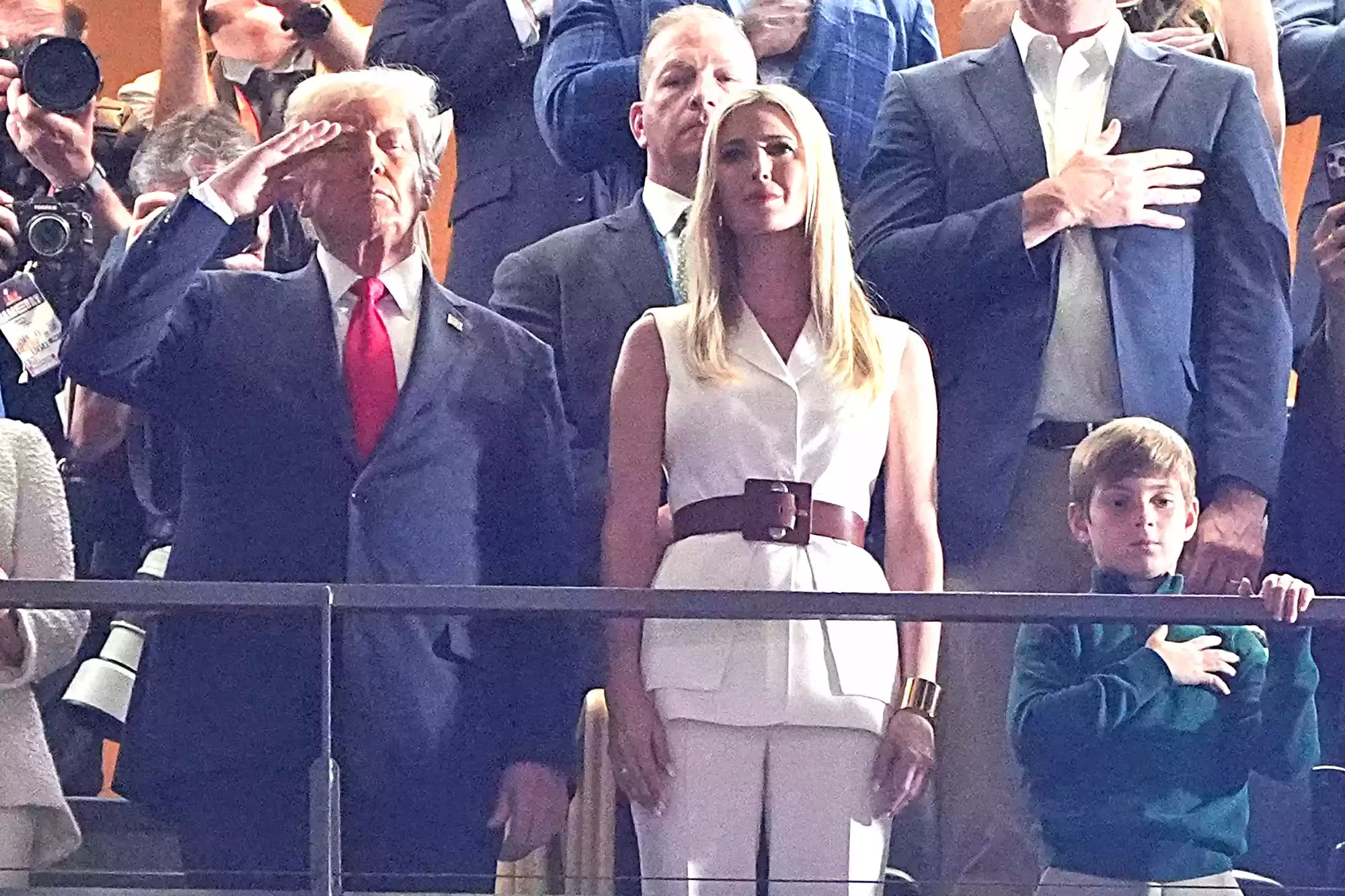
Super Bowl fans are split after a fleeting camera shot caught Donald Trump during the national anthem.

I. A Historic Night: Trump at Super Bowl LIX
Super Bowl LIX was more than just an exciting football game between the Kansas City Chiefs and the Philadelphia Eagles; it was a significant cultural event that people will talk about for a long time. The game took place at the famous Caesars Superdome in New Orleans on February 9, 2025, and it became even more interesting when President Donald Trump made history by being the first sitting U.S. president to attend the Super Bowl.
For many fans, the Super Bowl is about more than just the game itself. With amazing halftime performances, appearances by celebrities, and moments that reflect American culture, the event has become a place for stories that connect with people from all walks of life. President Trump’s attendance added a new twist to this tradition, sparking discussions about whether people celebrated the moment or had mixed feelings about it.
As everyone tuned in, the cameras showed the crowd, and for a brief moment, they caught Trump in the stands while Grammy-winning artist Jon Batiste sang the national anthem. While some viewers cheered loudly, others noticed hints of disagreement in the crowd. This mix of reactions has led to lively discussions among sports fans, political commentators, and countless social media users.
II. Setting the Stage: The Superdome and a Moment of Firsts
Caesars Superdome in New Orleans is known as one of the best sports venues in America. With its amazing history and modern facilities, the Superdome has seen many unforgettable moments, from thrilling championship games to cultural events that bring fans together. Super Bowl LIX was a perfect chance for something special to happen.
The excitement was electric as 75,000 fans packed the stadium, and millions more watched from home. The game was a fierce competition between two top football teams. But while the crowd cheered and the halftime show dazzled, something else was happening—a moment when a camera showed President Trump getting comfortable in his seat among the fans during the national anthem.
This moment was important for a couple of reasons. First, it was a historic first: no sitting U.S. president had ever been at the Super Bowl before. Second, it happened during a powerful performance of the national anthem by Jon Batiste, when everyone was paying close attention. In this setting, every image mattered, every face was examined, and every reaction contributed to the larger conversation in our culture.


III. The National Anthem: Music, Patriotism, and a Pivotal Camera Pan
The atmosphere at Caesars Superdome was electric with patriotism before the game started, as Jon Batiste took the stage to sing the national anthem. Batiste, known for his amazing voice and huge fan base, filled the moment with pride and dignity, bringing everyone in the stadium together under a shared sense of national pride.
As Batiste sang, cameras captured not just the energy of his performance but also the different reactions from the audience. One notable shot showed President Donald Trump sitting among the fans. For many watching, this was a significant moment, blending political power with a national celebration. However, it also sparked some controversy.
Witnesses and media reports indicated that the audience’s reactions to Trump’s presence were mixed. While some fans cheered loudly, others seemed more reserved. After the performance, social media exploded with discussions as people debated whether the crowd’s response was truly joyful or if there was an undercurrent of disapproval.
IV. Mixed Reactions: Cheers, Booing, and the Ambiguity of Live Moments
In our super-connected world, every moment is quickly analyzed and shared online. The way people reacted to the camera showing President Trump during the national anthem was no different. Once the clip went viral, tons of posts and tweets popped up, showing a wide range of opinions.
Some users on Twitter joked, “You guys didn’t boo Donald Trump loud enough,” hinting that even though the camera caught applause, there were deeper feelings of discontent underneath. Others were more critical, expressing their disappointment at seeing Trump during such a serious moment. One annoyed user said, “It was pretty messed up to show Trump while Jon Batiste was singing the National Anthem; it made me and a lot of others boo,” capturing how some viewers felt his presence ruined the patriotic vibe of the anthem.
The confusion of the moment was made worse by the limits of live broadcasting. While cameras try to show the crowd’s energy, they can only capture a small part of what’s really happening in the huge stadium. Some viewers argued that what was shown on screen didn’t fully represent the complex reality on the ground. “Did they cheer or boo Trump? It’s hard to tell from the big screen,” one person pointed out, while another summed up the mixed feelings: “Some sections loved it; others clearly didn’t.”
These different views show a big challenge in understanding live events: the same moment can feel completely different to different people. In a stadium packed with tens of thousands of fans—each with their own beliefs and backgrounds—the reaction to one image can vary a lot. For President Trump, whose political career has been both controversial and prominent, this was probably expected.
V. The Broader Context: Politics, Patriotism, and the Super Bowl
🚨TRENDING: The crowd went crazy as President Donald Trump was shown during the national anthem before the Super Bowl.
— MLFootball (@_MLFootball) February 9, 2025
pic.twitter.com/jDzd6pjBiz
To fully appreciate the significance of the moment, one must consider the broader cultural and political context. The Super Bowl is no longer just a sports event; it has evolved into a multifaceted spectacle where art, entertainment, and politics intersect. For many Americans, the game is an annual ritual—a time when the nation comes together to celebrate not only athletic excellence but also the values that define the American experience.
President Trump attending Super Bowl LIX is a significant event because he is the first sitting president to go to the game. For his fans, this is a strong sign of leadership and a reminder of values like hard work, patriotism, and the American Dream. Trump shared his excitement about being in New Orleans and highlighted how football brings people together. He said, “I look forward to joining the fans in New Orleans for Super Bowl LIX to cheer on two great teams—the Kansas City Chiefs and the Philadelphia Eagles.” His words emphasized that football is more than just a sport; it’s something that unites people from different backgrounds.
On the other hand, some people see Trump’s attendance as a sign of the political divisions in the country. His impact on American culture and politics has sparked a lot of discussions over the years. For many critics, seeing him during such a meaningful moment as the national anthem raised questions about whether he was trying to take over an event meant for everyone to reflect together. The contrast between Trump’s presence and Jon Batiste’s heartfelt performance of the national anthem created a situation where both supporters and opponents could express their feelings and concerns.
This situation shows the complexity of the modern Super Bowl, which is not just a fun event but also reflects the current issues in American society. It’s a place where sports, politics, and celebrity come together, creating moments that can be both divisive and unifying.
VI. The Role of Live Broadcasting and Social Media in Shaping Perception
One of the most interesting things about this episode is how social media’s instant and worldwide reach turned a simple camera shot into a big debate across the nation and even around the world. Nowadays, every moment is captured and shared right away, and events like the Super Bowl leave a digital mark that can last much longer than the event itself.
When the camera showed President Trump during Jon Batiste’s performance, thousands of people jumped onto platforms like Twitter, Instagram, and TikTok to share their thoughts right away. Some posts were full of excitement and support, while others clearly showed disapproval. This quick spread of images and opinions can highlight the details of live events in ways that regular TV broadcasts just can’t.
Social media has become like a modern town square where public opinions are created and shared. Hashtags like #SuperBowlLIX and #TrumpAtTheSB quickly became popular, creating a space for people to talk and debate. In this setting, every tweet, meme, and video adds to a story that keeps changing. The online discussion about Trump’s appearance during the national anthem shows how live moments aren’t fixed—they are seen, re-seen, and remembered differently by different groups of people.
Additionally, sharing these moments online can turn a quick image into a lasting cultural reference. In this case, whether the crowd cheered or booed, the debate itself has become part of the Super Bowl’s lasting legacy—a reminder that the effects of live events are measured not just by what happens on the field but also by how those moments are talked about and remembered long after the game is over.
VII. The Complexity of Regional and Political Loyalties
The crowd’s reaction at Caesars Superdome is complicated by the different backgrounds and political views of the audience. New Orleans is famous for its vibrant culture and dedicated sports fans, drawing in a wide range of supporters from all over the country. A large number of these fans were cheering for the Philadelphia Eagles, a team known for having a very passionate and vocal fan base.
For many Eagles fans, their loyalty is closely tied to their regional pride, so President Trump’s appearance might have meant something different to them compared to other people in the crowd. Some fans saw his presence as a symbol of political conservatism, which contrasts with the values of many local supporters. This could explain why the crowd’s reaction during the national anthem seemed mixed; it might show more than just indifference—it could be a reflection of their regional and political identities.
Social media also picked up on this idea. One funny tweet pointed out, “The crowd is 80% Eagles fans—no wonder they didn’t give Trump a full round of applause!” This suggests that the crowd’s response was less about Trump himself and more about what he stands for in the larger picture of American politics.
Understanding this regional aspect is key to figuring out why the live reactions were so varied. In a diverse place like the Superdome, different sections of the audience are likely to react in different ways based on their own beliefs and experiences. So, while one camera might catch loud cheers, another might show quieter or even negative responses, highlighting the divided opinions in today’s society.
VIII. President Trump’s Message of Unity and the National Spirit
In the midst of all the social media chatter and intense discussions, President Trump aimed to present his attendance at Super Bowl LIX in a positive and unifying way. Just before the big game, he shared a statement that highlighted the spirit of American football and the common values it represents. Trump’s message focused on pride in the nation’s achievements and the important ideals of hard work, dedication, and the American Dream.
During his official comments, Trump pointed out how football has the power to bring people together, saying that the Super Bowl is an event where families, friends, and communities unite. “Tonight, we gather as one nation to honor our athletes and the competitive spirit that makes our country great,” he stated. His carefully chosen words aimed to inspire feelings of patriotism and togetherness, reminding everyone that, despite political differences, the Super Bowl is a celebration of being American.
Supporters found this message very meaningful. They viewed his presence and words as a sign of his leadership and dedication to the country’s fundamental values. On the other hand, critics were more doubtful. Some believed that by stepping into a space usually free of politics, Trump was using the occasion for his own political advantage instead of simply celebrating the game’s spirit.
This situation—the contrast between the President’s hopeful message of unity and the mixed reactions from the audience—reflects the current state of American society. It shows the deep cultural and political divides that continue to influence public conversations, even during times that are supposed to be joyful and unifying.
IX. The Legacy of a Moment: Cultural Significance Beyond the Game
As the last few moments of Super Bowl LIX passed and the crowd began to leave, it was clear that the night would be remembered for a long time. President Trump being there was a big deal, and the mixed feelings during the national anthem have already started conversations that go beyond just football.
This situation shows that events like the Super Bowl are not just about the game; they are important cultural events that reflect the feelings, divisions, and hopes of our country. The different reactions to Trump’s attendance during such a meaningful moment like the national anthem highlight the complicated relationship between fame, politics, and love for the country in America today.
For historians and people who study culture, this event will probably be looked at as an example of how public figures influence major happenings. It shows how quick moments on live TV can lead to discussions that last for years. Whether people see the reactions as real support or hidden criticism, it’s clear that this event has added a new layer to the Super Bowl’s story—a story that is shaped not just by sports achievements but also by the strong cultural and political forces in our society.
X. Looking Forward: The Future of Live Events and Public Discourse
The impact of President Trump attending Super Bowl LIX and the discussions that followed about the national anthem teaches us valuable lessons for future live events. As sports, politics, and celebrity culture become more connected, figuring out how to handle live reactions will get trickier.
Event organizers and broadcasting companies might need to rethink how they capture and show live footage. The uncertainty that comes with live camera work, especially how it can highlight audience reactions, will keep being a hot topic. Plus, we can’t ignore how social media plays a huge role in shaping what people think. As online platforms change, the ways we share and talk about live moments will also evolve, becoming part of our cultural history.
In the future, Super Bowls and other big events will probably use more advanced techniques to manage both what happens on the field and the stories happening off the field. This could include new camera methods, carefully chosen social media posts, or clear messages from well-known figures, all aimed at making sure every moment is appreciated and understood in its full context.
Additionally, this situation highlights the need for a bigger conversation about public expression in a divided society. As viewers, we should not only try to understand what we see but also think about the many influences that shape our views—whether they are political, regional, or cultural. By doing this, we can realize that the real strength of live events is not in being flawless but in their ability to inspire conversation, reflection, and even change.
XI. Conclusion: A Moment That Redefined the Super Bowl Experience
Super Bowl LIX at Caesars Superdome in New Orleans will go down in history as a night to remember—one that went beyond just sports and became a significant moment in American culture. President Donald Trump was there, making it the first time a sitting president attended the Super Bowl, which made the event even more exciting and politically charged. When the cameras caught Trump during Jon Batiste’s emotional performance of the national anthem, it sparked a huge debate. People were split on whether his reaction showed pure patriotism or if it hinted at some disapproval.
The mixed reactions to the Super Bowl show just how divided American society is today. Some people cheered loudly, while others shared sharp criticisms online. Even with all the disagreements, the Super Bowl highlighted how live events can spark important conversations. They reflect our common values and the conflicts we face, pushing us to think about our cultural identity.
President Trump’s statement aimed to promote unity and the American Dream, trying to connect people. But the reality, shown in quick camera shots and countless tweets, showed that achieving national unity is complicated and filled with different feelings and views. It reminds us that while sports can unite us, they can also reveal the deep divides in our society.
Looking ahead, the lessons from Super Bowl LIX are significant. The way we broadcast live events, the power of social media, and the complex relationships between politics and local loyalties suggest we are entering a new time where every moment on a big stage reflects both our shared interests and our differences. Whether through displays of strong patriotism or quiet protests, the impact of this Super Bowl will shape how we view and engage with live events for many years.
In the end, the true magic of Super Bowl LIX—and of live events in general—lies in their ability to capture the unpredictable, to provoke thought, and to unite us in a collective experience that is as diverse as it is profound. President Trump’s historic appearance, coupled with the complex reactions it elicited, stands as a vivid illustration of the power of public moments to shape our cultural landscape. It is a reminder that even in our most divided times, events like these offer an opportunity for reflection, conversation, and ultimately, a deeper understanding of what it means to be a part of this ever-changing tapestry of American life.
As the excitement and discussions keep buzzing online, we should remember that the Super Bowl is more than just a game. It brings together sports, politics, and culture, showing what our country is all about. Whether you cheered, questioned what it meant, or thought of it as a reflection of our society’s divides, one thing is certain: that unforgettable night at the Caesars Superdome will be remembered as a key moment in American entertainment history.
To sum it up, Super Bowl LIX not only showcased amazing athletic performances but also became a significant cultural event when President Donald Trump made his first appearance at the Super Bowl. The mixed reactions during the national anthem—where the camera caught the President in the crowd, either being cheered or booed—sparked lively discussions on social media and in the news. Supporters celebrated, while critics questioned the authenticity of the crowd’s response, highlighting the complicated relationship between sports, politics, and public opinion.
Looking back on this important event, it’s clear that the Super Bowl’s real impact lies in its ability to inspire thought and generate different reactions. Whether seen as a moment of national togetherness or a point of political disagreement, the memory of this night will influence how we view live events in our connected world. Future generations will look back at Super Bowl LIX as a time when the lines between entertainment and politics blurred, creating a rich story that reflects the spirit, struggles, and aspirations of our era.
For those who watched the game live or kept up with the drama online, the mixed feelings about President Trump’s appearance show us that even during the happiest events, human emotions and political views are really complicated. This uncertainty is what makes live entertainment so exciting—it reminds us that every moment, no matter how short, can inspire us, make us think, and bring us together in our shared experiences.
As we keep scrolling through tweets, discussing that important national anthem moment, and what it means for future live events, let’s also appreciate how our culture can hold so many different opinions. Ultimately, the Super Bowl shows the strength of our imagination—a place where history happens, ideas are exchanged, and every moment leaves a lasting impression on our cultural memory.
This article has looked at every aspect of President Donald Trump’s historic Super Bowl appearance—from the importance of a sitting president attending the game for the first time to the mixed reactions during the national anthem and the social media discussions that followed. It has created a clear picture of a moment when sports, politics, and celebrity came together to make a lasting impact—one that will keep sparking conversations and influence how we see live events in the future.
Whether you’re a huge football fan, someone who follows politics, or just curious about how culture and celebrity mix, the story of Super Bowl LIX is a strong reminder of the complex nature of modern American life. And as we think back on that memorable night at the Caesars Superdome, we see that even when we disagree, there’s a common experience that connects us all—one that keeps inspiring discussions, reflections, and the ongoing story of our cultural history.